
Flex Space Construction: A Complete Guide to Building Modern Multi-Use Industrial Facilities
The commercial real estate landscape is rapidly evolving, with flex space construction emerging as one of the most sought-after development types in modern business parks. As businesses demand more adaptable facilities that can evolve with their operational needs, developers and modern companies are increasingly turning to flexible spaces that combine warehouse space, office area, and light manufacturing units under one roof. The key advantages of flex space construction—such as versatility, strong investment potential, and adaptability—make it an attractive option for both investors and businesses.
This comprehensive guide explores every aspect of flex space construction, from initial cost factors to future-proofing strategies. Whether you’re a developer evaluating industrial flex properties, a business owner seeking cost effective solutions, or a commercial broker understanding market demands, this analysis provides the essential insights needed for successful flex space development.
The growing demand for these versatile facilities stems from fundamental shifts in how modern businesses operate. E commerce growth, changing supply chain requirements, and the need for operational efficiency have created high demand for buildings that can adapt as a business evolves. Unlike traditional office spaces or industrial building projects, flex space construction requires specialized knowledge of multiple space types and their integration.
What is Industrial Flex Properties Construction?
Flex space construction refers to building single story buildings that seamlessly integrate warehouse space, office areas, and sometimes light manufacturing or retail functions within one cohesive structure. These flexible spaces, often called flex warehouses, typically feature 14-24 foot clear ceiling heights, loading docks, and adaptable interior layouts that can be reconfigured as operational needs change.
The key characteristics that distinguish flex properties from traditional warehouses or conventional office space include:
Multi-functional design capability - Unlike traditional office space that serves a single purpose, flex spaces accommodate everything from data storage and distribution centers to creative workspaces such as art studios, as well as client meetings. This versatility allows growing companies to consolidate operations that would otherwise require separate leases and supports artistic endeavors for artists and creative professionals.
Optimized ceiling heights - The high ceilings in flex spaces provide essential storage capacity while maintaining the professional appearance needed for office functions. This design element enables most businesses to utilize vertical space efficiently while preserving natural light in office areas.
Strategic loading areas - Modern flex construction incorporates loading docks and overhead doors positioned to support operational efficiency without disrupting office functions. This separation allows sales teams to conduct client meetings while distribution companies handle shipping operations simultaneously.
Scalable infrastructure - The electrical, HVAC systems, and data infrastructure in flex spaces are designed to support diverse operational needs. Whether a business requires paint booths for automotive work, data centers for technology operations, or conference rooms for professional services, the underlying systems can adapt.
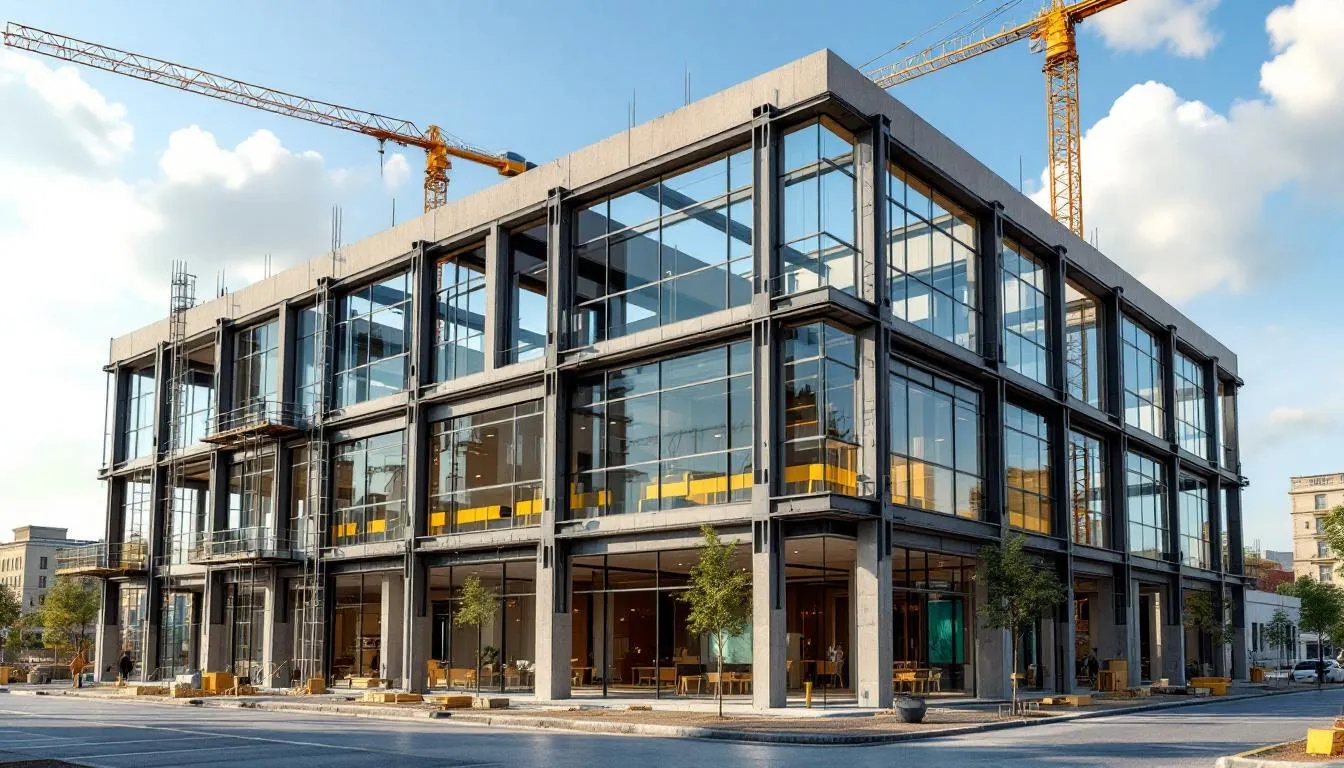
The growing construction demand for these facilities is driven by several market forces. E commerce expansion has created unprecedented demand for facilities that combine warehousing with customer service operations. Growing businesses appreciate the ability to scale operations without relocating, while established companies value the cost effectiveness compared to maintaining separate facilities.
Construction differs from traditional warehouse or office building development because flex space construction must satisfy the requirements of multiple space types simultaneously. This complexity requires specialized expertise in zoning restrictions, HVAC systems design, and structural engineering that can support diverse operational needs while maintaining cost effectiveness.
Construction Cost Factors for Flex Space Development
Understanding the financial landscape of flex space construction is crucial for making informed development decisions. Total project costs typically range from $60-120 per square foot depending on specifications, location, and the complexity of multi-functional requirements. This range reflects the diverse nature of flex properties, where basic warehouse conversions fall at the lower end while high-end facilities with extensive office buildouts reach the upper range.
Regional variations significantly impact construction costs, with metropolitan areas commanding higher expenses due to land costs, labor rates, and permitting complexities. For example, flex space construction in major urban centers may exceed $150 per square foot, while projects in secondary markets with industrial areas and business parks often achieve costs closer to $80 per square foot. In these urban centers, the limited supply of flex spaces further contributes to higher rental rates and strong demand, making such properties especially desirable for investors.
Site conditions play a crucial role in determining final costs. Properties requiring extensive site preparation, soil remediation, or utility extensions can add $15-30 per square foot to base construction costs. Local building codes also influence expenses, as some jurisdictions require enhanced fire suppression systems, additional parking ratios, or specific accessibility features that impact the overall budget.
When comparing flex space construction costs to traditional building types, the hybrid nature creates both advantages and challenges. Flex spaces also allow tenants to easily add more office space as their needs evolve, which can impact overall project costs:

The cost-effectiveness of flex space construction becomes apparent when considering the operational costs and revenue potential. A single flex property can generate income from multiple space types while offering tenants the convenience of consolidated operations.
Soft Costs in Flex Space Construction
Soft costs represent a significant portion of total project expenses, typically accounting for 20-30% of overall development costs. These expenses require careful planning and can impact project timelines and profitability if not properly managed.
Architectural and engineering design costs typically consume 8-12% of total project cost, reflecting the complexity of designing systems that serve both industrial space and office areas efficiently. The design process for flex spaces requires coordination between multiple engineering disciplines to ensure proper integration of HVAC systems, electrical capacity, and structural elements that support diverse operational needs.
Permits, inspections, and regulatory compliance expenses vary significantly by location but often represent $3-8 per square foot of total construction cost. Many jurisdictions classify flex properties differently than traditional industrial buildings, requiring additional reviews and inspections that can extend approval timelines. Economic development agencies in some areas offer streamlined permitting for flex space projects that support job creation and industrial diversification.
Site surveys, geotechnical analysis, and environmental assessments are essential for proper foundation design and regulatory compliance. These studies typically cost $15,000-40,000 for standard flex space sites but can increase substantially for properties with environmental concerns or complex soil conditions. The investment in thorough site analysis prevents costly construction delays and ensures proper foundation design for mixed-use loading requirements.
Legal fees, insurance, and financing costs during the construction phase often total 3-5% of project cost. Flex space construction requires specialized insurance coverage that accounts for mixed industrial and office uses, while financing terms may differ from traditional warehouse or office projects due to the versatility and market demand for these properties.
Hard Costs and Material Expenses
Hard costs represent the physical construction elements and typically account for 60-70% of total project expenses. The unique requirements of flex space construction influence material selection and construction methods in several key areas.
Foundation and concrete work for flex spaces must accommodate varying floor loads between office areas and warehouse sections. Office areas typically require standard commercial foundations, while warehouse sections need reinforced concrete capable of supporting heavy equipment, racking systems, and frequent forklift traffic. For specialized uses such as cold storage, reinforced foundations, advanced insulation, and dock seals are required to maintain temperature control, which can significantly increase construction costs. This dual-requirement often adds $5-12 per square foot compared to single-use construction.
Structural systems including steel framing and roofing materials represent major cost components, typically $15-25 per square foot for basic systems. The structural design must support high ceilings in warehouse areas while providing appropriate ceiling heights for office functions. Modern flex construction often utilizes pre-engineered steel buildings that offer design flexibility and cost effectiveness while accommodating future modifications.
Electrical and HVAC systems for flex spaces require sophisticated design to efficiently serve both warehouse and office environments. Electrical systems must provide adequate capacity for industrial equipment while supporting modern office technology infrastructure. HVAC systems need zoned control to maintain comfortable office environments while providing appropriate climate control for warehouse operations. These systems typically cost $18-30 per square foot, reflecting their complexity and dual-purpose design.
Interior finishes create the most variable cost component, ranging from basic warehouse standards to professional office environments. Many flex properties include tenant improvement allowances that enable customization of office areas while maintaining cost effective warehouse finishes in industrial sections. This approach allows growing companies to create appropriate environments for client meetings and professional functions while controlling overall occupancy costs.
Construction Methods and Building Systems
The choice of construction methods significantly impacts both initial costs and long-term flexibility of flex space projects. Modern flex space construction typically employs either pre-engineered steel buildings or concrete tilt-up construction, each offering distinct advantages for multi-use applications.
Pre-engineered steel buildings provide exceptional flexibility and faster build times, making them ideal for flex properties where future modifications are anticipated. Steel construction allows for larger clear spans, reducing the number of interior columns that might limit future reconfigurations. The modular nature of steel systems enables business owners to modify office areas or add separate office sections without major structural changes. Construction timelines for steel buildings typically run 8-10 months from design to occupancy, supporting faster market entry for development projects.
Concrete tilt-up construction offers superior durability and thermal efficiency, particularly beneficial for facilities requiring consistent climate control across both office and warehouse areas. The mass of concrete walls provides excellent sound insulation, important for properties where light manufacturing activities operate near office functions. Tilt-up construction also offers superior fire resistance and security, valuable features for businesses storing valuable inventory or operating data centers within their flex space.
Hybrid construction approaches combine different systems to optimize performance and cost effectiveness. Many successful flex properties utilize steel framing for warehouse areas to maximize flexibility while employing concrete construction for office sections to enhance comfort and professional appearance. This approach allows each area to benefit from the most appropriate construction method while maintaining overall project cost effectiveness.
The selection of construction methods should consider the target tenant mix and anticipated operational needs. Properties targeting distribution companies may prioritize clear spans and loading dock access, favoring steel construction. Facilities designed for technology companies or professional services might emphasize office environments and energy efficiency, making concrete construction more appropriate.

Wall Systems for Flex Space Construction
Wall system selection significantly impacts both construction costs and operational efficiency in flex space projects. The choice must balance cost effectiveness, energy efficiency, and aesthetic requirements across different functional areas within the facility.
Pre-fabricated metal wall panels offer exceptional customization options and lower upfront costs, making them popular for flex properties targeting diverse tenant types. These systems enable easy modification of building appearance and functionality as tenant needs change. Metal panels can incorporate various insulation levels, allowing developers to optimize energy performance in office areas while maintaining cost effectiveness in warehouse sections. The modular nature of metal panel systems supports future expansions or reconfigurations without major structural modifications.
Concrete tilt-up panels provide superior durability and energy efficiency, particularly valuable for flex properties in extreme climates or areas requiring enhanced security. The thermal mass of concrete walls helps maintain stable indoor temperatures, reducing HVAC operational costs across both office and warehouse areas. Tilt-up construction also offers excellent noise control, enabling light manufacturing or assembly lines operations without disrupting office functions in adjacent areas.
Insulated metal panels for office areas requiring precise climate control offer optimal energy efficiency while maintaining construction flexibility. These systems provide superior insulation values compared to standard metal panels while supporting the professional appearance needed for client meetings and conference rooms. The installation speed of insulated metal panels can reduce construction timelines while providing long-term operational efficiency.
Design considerations for combining different wall systems in one building require careful attention to thermal bridging, moisture control, and aesthetic continuity. Successful flex space construction often utilizes higher-performance wall systems for office areas while employing cost effective solutions for warehouse sections. This approach optimizes both construction costs and operational efficiency while maintaining the professional appearance needed for diverse business functions.
The integration of different wall systems must account for expansion joints, weatherproofing, and maintenance accessibility. Proper design ensures that each system performs optimally while contributing to the overall flexibility that makes flex properties valuable for growing businesses and modern companies.
Roofing Systems and Design
Roofing system selection for flex space construction must balance cost effectiveness, energy efficiency, and structural requirements for diverse operational needs. The roof design affects everything from energy costs to equipment installation possibilities, making it a critical component of successful flex space construction.
Standing seam metal roofs provide excellent weather resistance and structural performance for industrial areas while supporting future equipment installations. The durability of metal roofing systems reduces long-term maintenance costs while providing the structural capacity needed for HVAC equipment, solar installations, or specialty ventilation systems that many businesses require. Metal roofing also offers excellent fire resistance, important for properties housing diverse operational activities under one roof.
EPDM membrane systems offer cost effective waterproofing for basic warehouse areas while providing adequate performance for most flex space applications. These systems work particularly well for properties where cost effectiveness takes priority over premium performance. EPDM systems can be easily modified to accommodate future roof penetrations or equipment installations as tenant needs evolve.
TPO roofing provides optimal energy efficiency through superior reflective properties, reducing cooling costs across both office and warehouse areas. The white surface of TPO systems reflects solar heat, particularly beneficial for facilities with significant office areas requiring consistent climate control. TPO systems also offer excellent chemical resistance, valuable for properties that may house auto repair shops, paint booths, or other operations involving chemical processes.
Structural requirements for supporting HVAC equipment, cranes, and future expansions must be incorporated during initial construction to avoid costly modifications later. Many flex properties include reinforced roof sections capable of supporting equipment platforms, allowing tenants to install specialized systems without structural modifications. This planning enables facilities to accommodate diverse operational needs from data storage requiring precision cooling to light manufacturing requiring overhead material handling systems.
The roof design should also consider natural light integration through skylights or translucent panels, particularly important for maintaining productive office environments while controlling energy costs. Proper daylighting design can reduce electrical consumption while creating appealing work environments that support employee productivity and business success.
Essential Design Features for Flex Space Construction
The success of flex space construction depends heavily on incorporating design features that support operational efficiency across multiple space types. These elements must work together seamlessly to create facilities that truly serve diverse business needs while maintaining cost effectiveness for tenants and property owners.
Loading dock specifications require careful consideration of both dock-high and grade-level options to accommodate diverse tenant needs. Dock-high loading serves traditional distribution companies and larger logistics operations, while grade-level access supports businesses using smaller delivery vehicles or requiring easy access for customer pickups. Many successful flex properties incorporate both options, with dock-high positions serving primary warehouse functions and grade-level access supporting office-related activities and smaller-scale operations.
Overhead door placement and sizing significantly impacts operational efficiency for businesses using warehouse space for everything from storage to light manufacturing. Standard 12x14 foot doors accommodate most delivery vehicles and equipment access needs, while larger 14x16 foot doors support businesses requiring forklift access or larger equipment movement. The positioning of overhead doors must consider both operational efficiency and security, ensuring loading areas don’t compromise office area access or professional appearance.
Office build-out specifications including HVAC, electrical, and finish requirements must support professional functions while maintaining cost effectiveness. Modern businesses expect office areas to provide appropriate environments for client meetings, video conferencing, and professional operations. This includes adequate electrical capacity for modern technology, comfortable climate control independent of warehouse areas, and finishes that support business professional image and employee productivity. Flex spaces also enable the sales team to access inventory quickly and collaborate seamlessly with other departments, streamlining sales processes and supporting business growth. Proper allocation of square footage between office and warehouse areas further enhances this operational efficiency.
Parking ratios present unique challenges in flex space design, as facilities must accommodate both warehouse workers and office staff with different transportation and timing patterns. Successful flex properties typically plan for 2-3 parking spaces per 1,000 square feet of office area and 1-2 spaces per 1,000 square feet of warehouse space. This ratio accounts for different shift patterns and vehicle types while ensuring adequate access for both business operations and professional visits.

HVAC and Electrical Systems
The design of HVAC and electrical systems represents one of the most complex aspects of flex space construction, as these systems must efficiently serve distinctly different operational requirements within the same facility.
Zoned HVAC systems enable separate climate control for warehouse and office areas, crucial for both energy efficiency and operational comfort. Office areas typically require precise temperature and humidity control to support employee productivity and professional meetings, while warehouse areas need basic climate control focused on equipment protection and worker comfort. Independent zoning allows businesses to optimize energy consumption by conditioning only occupied areas during off-peak times.
Energy-efficient heating and cooling solutions including radiant heating systems offer excellent performance for warehouse areas with high ceilings. Radiant systems heat objects and people directly rather than heating air, making them ideal for warehouses where traditional forced-air systems struggle with thermal stratification. For office areas, high-efficiency heat pumps or VAV systems provide precise control while minimizing operational costs.
Electrical capacity planning must accommodate both industrial and office equipment requirements without over-designing systems. Warehouse areas need adequate capacity for materials handling equipment, compressors, and potential machinery installations, typically requiring 400-800 amp service depending on facility size and anticipated uses. Office areas require modern electrical infrastructure supporting computers, servers, video conferencing systems, and other technology that growing businesses depend on for competitive advantage.
LED lighting systems with natural daylighting integration provide energy efficient illumination while creating productive work environments. Warehouse areas benefit from high-bay LED fixtures that provide excellent light distribution at minimal energy cost, while office areas need lighting systems that support both general illumination and task-specific requirements. Automated lighting controls can significantly reduce energy consumption while ensuring appropriate illumination levels for safety and productivity.
The integration of smart building controls enables facility management systems that monitor energy consumption, optimize system performance, and provide operational data that supports business decision-making. These systems particularly benefit multi-tenant flex properties where energy costs need allocation among different operational activities.
Flexible Interior Construction for Office Space
The interior construction approach significantly determines how successfully a flex space can adapt to changing business needs over time. Design decisions made during initial construction either enable or constrain future modifications, making flexibility planning essential for long-term property value and tenant satisfaction.
Demising wall systems allowing easy reconfiguration enable tenants to modify space allocation between office and warehouse functions as their business evolves. Moveable wall systems using steel stud construction with standard drywall finishes can be relocated relatively easily, while more permanent solutions using concrete block provide better sound isolation for businesses requiring separation between different operational activities.
Raised office floors provide exceptional flexibility for utility routing while supporting future technology infrastructure needs. These systems enable easy installation of additional electrical, data, and telecommunication services without disrupting ongoing operations. Raised floors particularly benefit businesses expecting to expand their technology operations or requiring specialized systems for data storage, telecommunications, or other technology-intensive activities.
Modular office construction enables future expansions within existing warehouse space, allowing growing companies to add office area without relocating or undertaking major construction projects. This approach uses standardized construction components and utility rough-ins that can be activated when additional office space is needed. The modular approach supports businesses experiencing rapid growth while maintaining cost effective expansion options.
Open warehouse areas with minimal structural obstacles provide maximum flexibility for diverse operational layouts. Clear span construction eliminates interior columns that might limit equipment placement, storage configurations, or workflow design. This approach enables the same space to serve as traditional warehouse storage, light manufacturing area, or even creative workspace depending on tenant requirements.
The key to successful flexible interior construction lies in planning utility infrastructure and structural systems that can support diverse configurations without requiring major modifications. This planning enables properties to serve different business types over time while maintaining operational efficiency and professional appearance across all functional areas.
Energy and Operational Efficiency in Sustainable Construction
Energy efficiency has become increasingly important in flex space construction, driven by both operational cost considerations and corporate sustainability goals. Modern flex properties must balance energy performance across different space types while maintaining cost effectiveness for diverse tenant operations.
LEED certification considerations and sustainable building practices offer both marketing advantages and operational benefits for flex properties. LEED-certified buildings typically achieve 10-20% lower operating costs through energy efficiency measures while commanding premium rental rates in competitive markets. The certification process for flex properties requires careful attention to energy modeling across different space types, as warehouse and office areas have distinctly different consumption patterns and efficiency opportunities.
Passive solar design for natural lighting and heating can significantly reduce operational costs while improving work environments across both office and warehouse areas. Strategic window placement and building orientation optimize natural light penetration while minimizing cooling loads. High-performance glazing systems enable abundant natural light in office areas while thermal control prevents excessive heat gain that would increase HVAC costs.
Insulation specifications for different zones within the building require careful balancing of performance and cost. Office areas benefit from enhanced insulation packages that maintain consistent temperatures for employee comfort and energy efficiency. Warehouse areas typically use cost effective insulation levels that prevent condensation and maintain reasonable temperatures for worker comfort without over-investing in areas where precision climate control isn’t required.
Energy management systems for monitoring and controlling consumption provide valuable operational data while enabling optimization of system performance. These systems allow property managers and tenants to identify energy waste, optimize equipment operation schedules, and allocate utility costs accurately among different operational activities. Advanced systems can automatically adjust lighting, HVAC, and other systems based on occupancy patterns and operational schedules.
The integration of renewable energy systems, particularly solar installations, offers excellent returns on investment for flex properties with appropriate roof conditions and electrical infrastructure. The combination of federal tax incentives and declining equipment costs makes solar installations increasingly attractive for flex space construction projects.

Site Development and Infrastructure
Site development for flex space construction requires careful planning to accommodate the diverse operational requirements and traffic patterns associated with mixed-use facilities. Choosing a central location for flex space offers significant benefits, such as proximity to urban centers and major transportation hubs, which facilitates logistics, improves ease of access for employees and customers, and supports operational efficiency. Unlike traditional warehouse or office developments, flex properties must support both professional activities and industrial operations efficiently.
Site preparation requirements for mixed warehouse and office use often involve more complex grading and drainage solutions than single-use facilities. The site must accommodate both truck traffic for loading operations and passenger vehicle access for office functions without operational conflicts. This typically requires separate circulation patterns and adequate queuing areas for delivery vehicles that don’t interfere with employee parking or professional visits.
Parking and circulation design accommodating trucks and passenger vehicles represents one of the most challenging aspects of flex space site development. Successful designs separate truck circulation from passenger vehicle areas while ensuring efficient access to loading areas. Access to major highways is also crucial, as it enables efficient logistics and connectivity for both deliveries and daily commutes. This often involves creating dedicated truck courts with appropriate turning radii for large vehicles while maintaining convenient passenger vehicle access to office entrances.
Utility infrastructure including water, sewer, electrical, and telecommunications must support diverse operational requirements within the same facility. Electrical service must accommodate both industrial equipment loads and modern office technology requirements, typically requiring 400-1000 amp services depending on facility size and anticipated tenant mix. Water and sewer systems need capacity for both office functions and potential industrial processes while meeting local codes for different occupancy types.
Stormwater management and landscaping requirements often exceed those for traditional industrial properties due to the mixed-use nature and professional appearance requirements. Local regulations may require enhanced stormwater treatment and retention systems, while the office component necessitates professional landscaping that enhances property appearance and supports business professional image.
The site development must also consider future expansion possibilities, as successful flex properties often experience demand for additional space or enhanced capabilities. Planning for future utility capacity and circulation improvements during initial development can significantly reduce costs and disruption if expansion becomes desirable.

Construction Timeline and Project Management
Flex space construction typically requires 8-12 months from design completion to occupancy, reflecting the complexity of integrating multiple building systems and space types. The timeline can vary significantly based on site conditions, permit requirements, and the level of customization required for specific tenant needs. Commercial brokers play a crucial role in helping developers find and secure flex space projects, often providing access to off-market properties and valuable local insights that can streamline the project timeline. Additionally, hidden gems—unique or undervalued flex spaces—can be discovered through local networking, unconventional methods, or by leveraging the expertise of well-connected professionals. Social media groups are also valuable resources for connecting with local professionals and uncovering flex space opportunities that may not be listed on mainstream platforms.
Design phase considerations including tenant improvement allowances often extend design timelines but provide valuable customization options for prospective tenants. Many developers begin construction of shell buildings while negotiating lease terms that include specific office build-out requirements. This approach enables faster occupancy for committed tenants while maintaining construction efficiency through standardized base building systems.
Construction sequencing to minimize disruption for early occupancy requires careful coordination of trades and systems installation. Many flex space projects enable partial occupancy of completed sections while construction continues in other areas. This sequencing particularly benefits multi-tenant projects where early occupants can begin operations while additional tenant improvements continue.
Quality control and inspection processes for mixed-use construction require coordination among multiple inspection authorities and specialized trades. The combination of industrial and office systems necessitates inspections for different building codes and occupancy types, potentially extending approval timelines. Proactive coordination with inspection authorities during the design phase can identify potential conflicts and streamline the approval process.
Project management for flex space construction must coordinate the diverse requirements of industrial and office construction trades while maintaining cost and schedule control. The complexity requires experienced project managers familiar with both industrial and commercial construction practices, as the hybrid nature can create coordination challenges not encountered in single-use projects.
Early coordination with utility providers, inspection authorities, and potential tenants significantly improves project outcomes while reducing timeline risks. Many successful flex space developments benefit from pre-construction meetings that align all stakeholders on project requirements and approval processes before construction begins.
Future-Proofing Flex Space Construction
Future-proofing strategies ensure flex properties remain competitive and valuable as business needs and technology continue evolving. The rapid pace of change in business operations and technology makes adaptability planning essential for long-term investment success.
Designing for technology integration including fiber optic and data infrastructure enables properties to support businesses with evolving technology requirements. Modern flex properties should include abundant data pathways, equipment spaces for telecommunications equipment, and electrical capacity for server installations or other technology infrastructure that growing businesses may require. This planning particularly benefits properties targeting technology companies, e commerce operations, or businesses requiring substantial data processing capabilities.
Structural considerations for future vertical expansion involve designing foundations and structural systems capable of supporting additional floors if market demand develops. While most flex properties remain single story buildings, properties in high-value locations may benefit from expansion capability that enables increased density without site limitations. The modest additional cost during initial construction provides valuable options for future development.
Modular construction techniques enabling easy reconfiguration support changing tenant needs while maintaining property value through diverse market cycles. Design approaches that anticipate common reconfigurations - such as expanding or contracting office areas - reduce future modification costs while minimizing disruption to ongoing operations. This planning particularly benefits properties in markets with diverse business types and changing space requirements.
Building automation systems for operational efficiency and monitoring provide valuable data about space utilization, energy consumption, and system performance that supports both property management and tenant operations. Advanced systems can optimize energy consumption automatically while providing data that helps tenants understand and improve their operational efficiency.
The integration of sustainable technologies and energy systems positions properties for future regulatory requirements and tenant sustainability goals. Many businesses now require sustainable facilities to meet their corporate environmental commitments, making energy efficiency and renewable energy capability important competitive advantages.
Future-proofing also involves anticipating changes in transportation and logistics, particularly the growth of electric vehicle adoption and autonomous delivery systems. Planning for electric vehicle charging infrastructure and delivery systems that don’t require traditional loading docks can provide competitive advantages as business operations continue evolving.
The most successful flex space construction projects balance immediate operational requirements with adaptability for future needs, creating properties that remain competitive and valuable through changing market conditions. This approach requires modest additional investment during construction but provides substantial value through enhanced tenant satisfaction, longer lease terms, and sustained market competitiveness.
Modern flex space construction represents an ideal solution for growing businesses seeking operational efficiency, cost effectiveness, and adaptability in today’s dynamic commercial environment. The combination of traditional warehouses functionality with professional office area creates facilities that support business growth while providing the flexibility needed to adapt as operational needs change.
The beauty lies in the ability to house multiple space types under one roof, enabling businesses to consolidate operations while maintaining the professional appearance and functional capability needed for success. As economic development agencies recognize the value of flex properties for attracting and retaining growing companies, and as industry associations document the consistent demand for these versatile facilities, flex space construction continues establishing itself as a cornerstone of modern industrial real estate development.
Regulatory Considerations for Flex Spaces
Navigating the regulatory landscape is a critical step in the successful development and operation of flex spaces within the commercial real estate sector. Because flex properties combine office space, industrial space, and sometimes retail or creative workspaces under one roof, they are subject to a unique set of regulations that differ from those governing traditional office spaces or industrial buildings.
Zoning and Land Use:The first regulatory hurdle for any flex space project is zoning. Local zoning ordinances determine whether a property can legally accommodate multiple space types, such as office areas, warehouse space, and light manufacturing units. Flex spaces often require special use permits or rezoning to allow for their hybrid nature. Business owners and developers should work closely with municipal planning departments early in the process to confirm that their intended use aligns with local zoning codes and to identify any restrictions on activities like light manufacturing, data storage, or retail sales.
Building Codes and Occupancy Classification:Flex properties must comply with building codes that address the safety and functionality of both office and industrial areas. This includes fire safety systems, egress requirements, and structural standards that may vary depending on the mix of uses within the building. Occupancy classifications can impact everything from parking ratios to HVAC system requirements, so it’s essential to ensure that the design and construction of flex spaces meet all applicable codes for each intended use.
Environmental and Accessibility Regulations:Environmental regulations may apply to flex spaces, especially if the property includes light manufacturing, auto repair, or storage of hazardous materials. Compliance with environmental standards—such as proper waste disposal, air quality controls, and stormwater management—is crucial to avoid costly fines and operational disruptions. Additionally, all flex properties must adhere to accessibility standards, such as the Americans with Disabilities Act (ADA), ensuring that office areas, warehouse sections, and common spaces are accessible to all users.
Permitting and Inspections:The permitting process for flex spaces can be more complex than for single-use buildings, as local authorities may require multiple inspections for different space types within the same property. Developers should anticipate longer approval timelines and budget for additional soft costs related to permitting and compliance. Engaging with experienced architects, engineers, and legal advisors familiar with flex space construction can streamline the process and help avoid regulatory pitfalls.
Staying Ahead of Regulatory Changes:The regulatory environment for commercial real estate is constantly evolving, particularly as cities adapt to the growing demand for flexible space solutions. Business owners and investors should stay informed about local policy changes, participate in industry associations, and maintain open communication with economic development agencies to ensure ongoing compliance and to capitalize on incentives or streamlined processes for flex space projects.
By proactively addressing these regulatory considerations, stakeholders can unlock the full potential of their flex properties, minimize risk, and ensure that their investments remain viable and attractive in a competitive real estate market.