
What’s Included in a Self Storage Structural Steel Package?
Key Takeaways
A self storage structural steel package typically includes primary frames, secondary framing, bracing, mezzanines, and connection hardware engineered as one coordinated system.
For multi-story self storage, high strength structural steel shapes such as I-beams, channels, angles, structural pipe, tube, tees, and other structural shapes are designed around snow, wind, and seismic force for the specific project location.
A complete Storage Building Company (SBC) package includes stamped structural drawings, anchor bolt plans, shop drawings, and erection plans aligned with the GC’s construction process.
Clear inclusions and exclusions reduce RFIs, change orders, cost surprises, and schedule risk.
Before final design, review your structural package with Storage Building Company (SBC).
Introduction: Why the Structural Steel Package Matters for Self Storage
For GCs and developers researching what's included in a self storage structural steel package, the answer is more than “steel.” The package is the backbone of a self-storage steel building: it defines span, height, length, width, corridors, unit partitions, mezzanines, and load paths.
This article focuses on climate-controlled, multi-story facilities of 60,000+ rentable SF, expanding on key considerations in building climate-controlled self-storage buildings. SBC specializes in self-storage structural systems, coordinating structural steel with unit layouts, corridors, doors, and trade sequencing so work can be erected quickly and reliably.
Core Components of a Self-Storage Structural Steel Package
A typical self-storage structural steel package is a prefabricated, pre-engineered metal building kit designed for rapid on-site assembly, similar to the coordinated systems provided through SBC Structural multi-level self-storage construction services. It usually includes:
primary structural steel shapes
secondary girts, purlins, and bridging
bracing and lateral systems
mezzanine and floor framing
fasteners, plates, and connection hardware
Structural steel is used around the world for creating building frameworks, acting as reinforcing and support rods, and as sheet products for cladding. Structural steel is inherently noncombustible, providing a safer option for construction compared to combustible materials like wood.
Design should be in accordance with the adopted building code, local amendments, ASCE 7 load criteria, and AISC/AISI standards.

Primary Framing: Columns, Beams, and Main Structural Steel Shapes
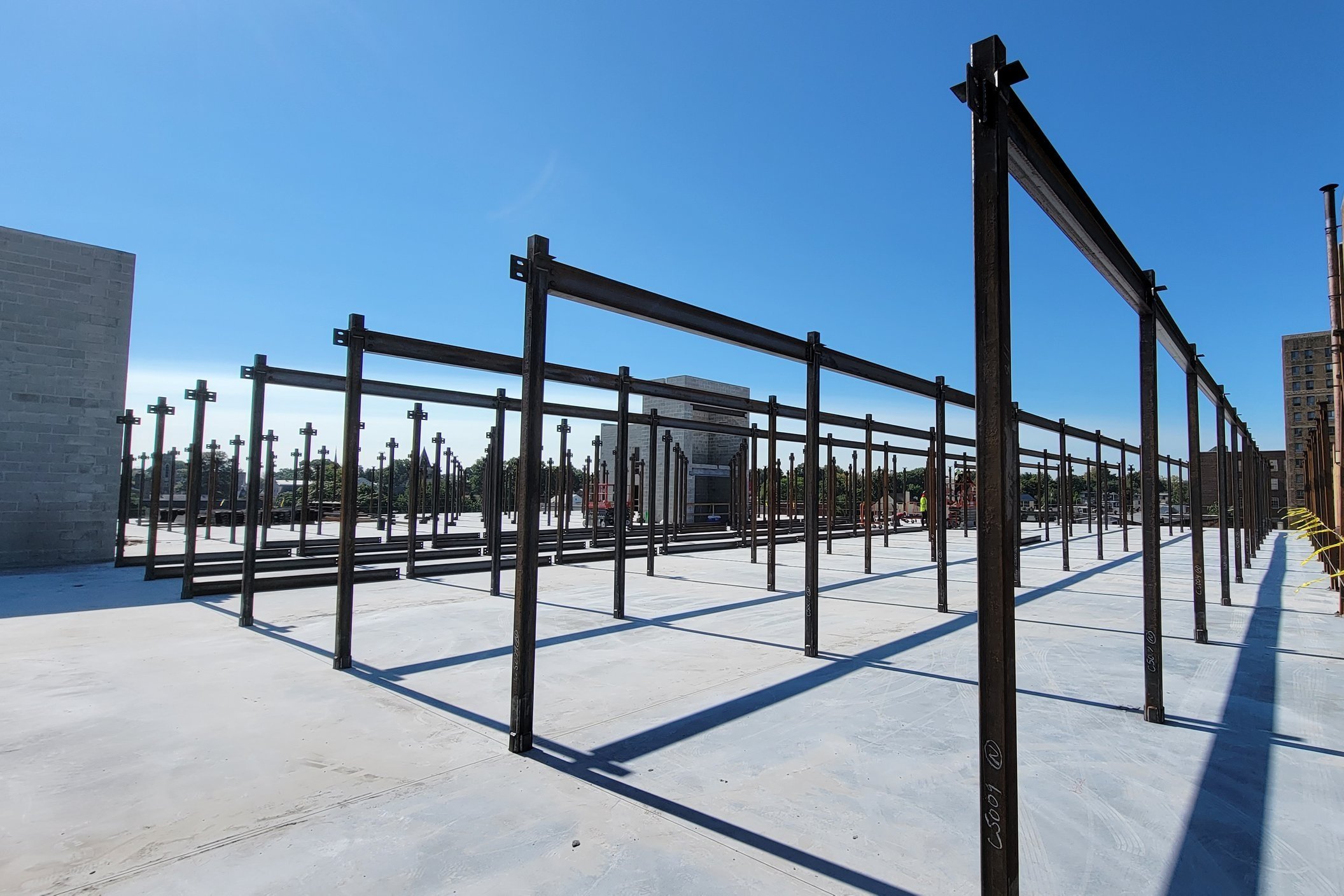
Columns and Rafters are hot-rolled structural I-beams that provide the primary support and define the building's overall span and height. Common names include wide-flange beams, I-beams, HSS columns, structural pipe columns, and built-up beams, which are often used for longer spans.
Typical storage grids may range from 20 to 30 feet, with story heights of 9 to 10 feet. SBC’s package includes shop-fabricated columns and beams, welded connection plates, base plates, camber where needed, and piece marks tied to erection drawings.
ASTM A992 wide flange beams and ASTM A500 HSS are common materials. Steel's high strength-to-weight ratio makes it ideal for tall structures, allowing for efficient construction and design. Structural steel has a high strength-to-weight ratio, making it ideal for tall structures and allowing for lighter designs without compromising safety. Over 80% of structural steel members are fabricated from recycled metals, making it a sustainable choice in construction. Over 80% of structural steel members are fabricated from recycled metals, contributing to sustainability in construction.
Secondary Framing: Girts, Purlins, and Cold-Formed Members
Secondary framing transfers roof, wall, cladding, sprinkler, lighting, and ceiling loads back to the primary frame. Cold-Formed Steel (CFS) includes C-shaped and Z-shaped light-gauge steel used for girts, purlins, and bridging. CFS members are highly durable, non-combustible, and cut to precise specifications, and the advantages and applications of cold-formed steel beams in self-storage construction make them a core part of many modern systems. ASTM A992 wide flange beams and ASTM A500 HSS are common materials for primary framing because they can withstand significant force while carrying building loads.
Purlins and Eave Struts are horizontal structural members that support the roof panels and tie the roof framing together. Roof Panels are typically 24- or 26-gauge Galvalume or standing-seam panels. Wall Panels are pre-finished or ribbed metal exterior siding, often 26-gauge, built to withstand harsh weather.
SBC aligns these shapes, sizes, fastener patterns, and openings with deck, panels, MEP shafts, and manufacturing tolerances so members are produced to specification.
High Strength Bracing and Lateral Systems: Keeping the Building Stable
Tall self-storage buildings need lateral stability. The package may use X-bracing with angles or rods, portal frames, moment frames, tube braces, or stair/elevator cores, and your lateral system choice often ties into whether you use cold-formed steel vs post and beam steel self-storage structures.
SBC defines braced bays, member sizes, and connection details while protecting rentable space. Wind speeds of 115–140 mph and seismic categories must be met where applicable. Confirm whether stair framing, elevator support, shear walls, or reinforced concrete cores are by SBC or others.
Mezzanines and Multi-Story Floor Systems
For modern steel structures, mezzanines and upper floors are a major part of the package, especially in multi-story self-storage construction projects. Components may include steel joists, beams, channels, structural shapes around openings, perimeter members, and metal deck with concrete fill.
Self-storage live loads are often 125 psf or more. SBC can design framing so corridor widths, unit depths, and demising walls align, creating reduced waste, faster erection time, and an easy path for trades, building on the best practices highlighted in SBC’s self-storage construction resources.
Connection Materials, Fasteners, and Miscellaneous Steel
A complete package includes the hardware that turns pieces into a system: clip angles, shear tabs, end plates, gusset plates, base plates, stiffeners, bolts, nuts, and washers, all of which factor into the overall cost to build a climate-controlled self-storage facility.
Fasteners and Sealants include self-drilling screws, bolts, nuts, washers, and butyl tape for assembling metal components. A325 or A490 high-strength bolts are common for main connections. Miscellaneous steel may include lintels, canopy supports, signage steel, and bollard sleeves when shown. Weld symbols, bolt sizes, connection design responsibility, and fabricated detail standards need attention in order to avoid change orders.
Engineering, Drawings, and Coordination Included with the Package
The paperwork is half the package. SBC deliverables typically include sealed calculations, design drawings, shop drawings, anchor bolt plans, erection plans, gridlines, elevations, bracing locations, roof slopes, and piece names.
Plans should show foundation reactions, MEP openings, HVAC support, and revisions required by 2024–2026 code reviews. Reviewing early helps ensure missing applications are found before fabrication.
What’s Typically Not Included (and Needs Clarification)
Exclusions matter as much as inclusions. Concrete foundations and slabs, anchor bolts by others, architectural panels, fireproofing, finish paint, special galvanizing, doors, and non-structural framing may be outside the structural scope, even though elements like cold-formed steel components in self storage construction can sometimes blur the line between structural and architectural packages.
Interior partitions are typically made of corrugated, galvanized steel panels that divide the primary building envelope into individual storage units. Roll-Up Doors are the industry standard for self-storage units and feature corrugated galvanized steel curtains, springs, and tracks. These can be coordinated with SBC, but may be separate packages, similar to how SBC coordinates exterior systems for boat and RV storage facility construction.
Create a responsibility matrix between SBC, the PEMB supplier, and specialty contractors. If you want to understand gaps, send SBC your bid documents, especially if you are considering self-storage conversions and retrofits of existing buildings.
How Storage Building Company (SBC) Supports Your Self Storage Project
SBC is not a generic steel distributor. We support self-storage developers with early schematic review, efficient steel construction planning, value engineering, and rentable-SF coordination as part of our broader multi-level self-storage construction services.
Our experience helps improve tonnage, durability, sequencing, and constructability. If your project needs a reliable structural package, contact Storage Building Company to review your current or planned self storage structural package before final pricing.

FAQ: Self Storage Structural Steel Packages
Do I need a different structural package for climate-controlled vs. non-climate self-storage?
Yes. Climate-controlled buildings often require more framing around mechanical rooms, ductwork, roof units, shafts, and tighter deflection limits. SBC accounts for these loads in the structural steel design, which is critical to realizing the benefits of climate-controlled self-storage facilities.
How long does it typically take to engineer and fabricate a self-storage structural package?
Typical engineering and approvals may take 3–6 weeks. Fabrication may take 6–10 weeks, depending on project size, steel availability, and 2026 market conditions, as reflected in timelines from SBC’s multi-level self-storage project portfolio. Early engagement can compress the schedule.
Can SBC integrate its structural package with a pre-engineered metal building (PEMB) system?
Yes. SBC can coordinate mezzanines, interior framing, specialty structural steel, and support steel with a PEMB shell, drawing on its role as a multi-level self-storage construction contractor. Load paths and responsibilities must be clearly defined.
What information does SBC need to price and design a structural steel package?
SBC needs preliminary architectural plans, story count, clear heights, site location, code year, live loads, MEP criteria, fire protection needs, owner standards, and any REIT guidelines.
How can I confirm that my current structural steel package is complete?
Send SBC your current drawings and scope for a no-obligation review. We check for common omissions such as bracing, mezzanine detailing, stair/elevator steel, fasteners, openings, and miscellaneous steel.